

Did you know that 75% of online shoppers rely heavily on visual quality when deciding to make a purchase? In the competitive United States e-commerce landscape, your digital storefront must capture attention instantly. High-quality visuals are no longer just a luxury; they are the backbone of a successful online business.
Many companies now boost conversion rates with ai-generated product images to create stunning, persuasive displays. This technology allows brands to showcase items in diverse settings without the high cost of traditional photography. By leveraging these tools, you can provide a personalized shopping experience that resonates with your specific audience.
This article offers practical guidance for businesses aiming to improve their online performance. We will explore how better visuals, smart testing, and modern design strategies work together to drive growth. Get ready to transform your catalog into a powerful sales engine.
Key Takeaways
- Visual quality is a primary driver for consumer purchasing decisions in the U.S. market.
- Modern technology helps brands create professional displays at a fraction of traditional costs.
- Personalization through advanced visuals significantly improves customer engagement.
- Strategic testing of visual assets leads to measurable growth in online sales.
- Implementing these tools requires a balance of creativity and technical compliance.
Understanding the Importance of Product Images
The absence of physical interaction in e-commerce makes visual representation the most critical factor in your conversion strategy. When shoppers cannot hold an item, they rely on their eyes to determine quality, size, and utility. This reliance turns every image into a vital touchpoint for your brand.
The Role of Visuals in Online Shopping
Visuals act as the primary bridge between a shopper’s curiosity and their final purchase. Without the ability to touch a product, customers look for high-resolution details that mimic a real-life experience. Clear, descriptive imagery reduces the uncertainty that often leads to abandoned carts.
By providing multiple angles and zoom capabilities, you help the customer build a mental model of the item. This process is essential for establishing the confidence needed to complete a transaction.
How Images Influence Purchase Decisions
Modern shoppers are highly visual, and their buying choices are often dictated by how well a product is presented. AI-driven product images play a massive role here by clarifying complex details and showcasing various use cases that traditional photography might miss.
“Design is not just what it looks like and feels like. Design is how it works.”
When you use AI-driven product images, you can create lifestyle scenes that place your product in a relatable context. This helps the customer visualize the item in their own home, which significantly boosts the likelihood of a sale.
The Power of First Impressions
A website’s aesthetic is often the first thing a visitor notices, and it sets the tone for their entire shopping journey. A consistent, professional look across your catalog signals reliability and high standards to your audience.
Using AI-driven product images allows you to maintain a uniform style, lighting, and background across all your listings. This level of consistency creates a polished storefront that builds immediate trust. First impressions are lasting, and high-quality visuals ensure that your brand remains memorable long after the visitor leaves your site.
What Are AI-Generated Product Images?
At its core, AI-generated imagery represents a significant shift in how we create digital storefronts. By leveraging advanced algorithms, businesses can now produce high-quality visuals that capture consumer attention without the need for traditional studio setups. This innovation is a powerful way to increase conversion through AI images by ensuring every product looks its absolute best.
Defining AI-Generated Images
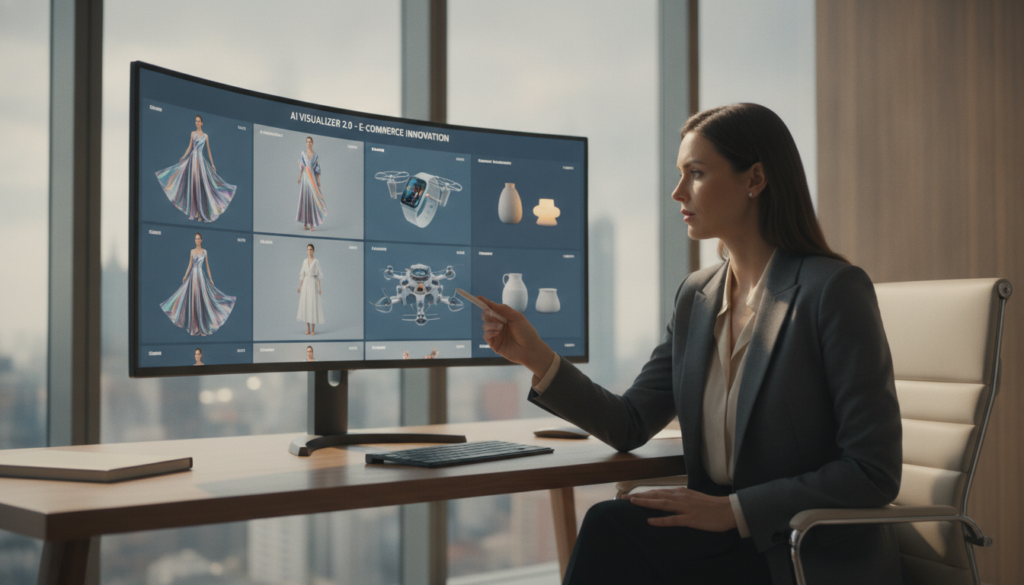
AI-generated product images fall into two primary categories: fully synthetic visuals and AI-enhanced photographs. Fully synthetic images are created entirely from scratch using software, meaning no physical product or camera was involved in the process. These are perfect for conceptual designs or items that are still in the prototype phase.
In contrast, AI-enhanced photography takes a real photo and uses machine learning to improve its quality. This might involve sharpening details, adjusting lighting, or removing distracting elements from the background. Both methods allow brands to maintain consistent visual standards across their entire catalog.
Technologies Behind AI Image Generation
The magic behind these visuals often comes from sophisticated models like Diffusion models and Generative Adversarial Networks (GANs). These systems learn from millions of existing images to understand textures, shadows, and light reflections. By analyzing these patterns, the AI can generate new, realistic scenes that mimic professional photography.
These technologies do not just copy existing photos; they synthesize new ones based on specific prompts. This allows designers to place a product in virtually any environment, from a cozy living room to a high-end office. The result is a highly flexible creative process that adapts to changing market trends instantly.
Real-World Examples of AI in Action
Many forward-thinking brands are already using these tools to stage products in diverse lifestyle settings. For instance, a furniture company might use AI to place a single chair in fifty different room styles to see which one resonates most with shoppers. This level of experimentation is a proven strategy to increase conversion through AI images by providing a more personalized shopping experience.
Another common application is background replacement for e-commerce listings. By swapping out cluttered or inconsistent backgrounds for clean, branded environments, companies create a polished look that builds trust. These real-world applications demonstrate that AI is not just a futuristic concept, but a practical tool for modern retail success.
Benefits of Using AI-Generated Product Images
Modern e-commerce success often hinges on how quickly and effectively a brand can display its inventory. By integrating AI-generated visuals for better conversion, businesses can transform their digital storefronts without the heavy logistical burdens of the past.

Cost-Effectiveness Compared to Traditional Photography
Traditional product photography often requires expensive studio rentals, professional lighting crews, and travel arrangements. These costs add up quickly, especially for small businesses or brands with large catalogs.
AI tools significantly reduce these overheads by eliminating the need for physical sets and props. While human oversight remains crucial to ensure brand accuracy, the reduction in production expenses allows teams to allocate their budgets toward other growth initiatives.
“Innovation distinguishes between a leader and a follower.”
Speed and Efficiency in Image Creation
Time is a precious commodity in the fast-paced world of online retail. Traditional photoshoots can take weeks to plan, execute, and edit before they are ready for a website.
AI platforms streamline this workflow by generating high-quality assets in a fraction of the time. This rapid turnaround enables marketing teams to launch new products or respond to market trends almost instantly.
Greater Customization and Variation
One of the most significant advantages of this technology is the ability to tailor content for specific audiences. You can easily adapt your product imagery to fit various contexts, such as:
- Seasonal holiday campaigns
- Localized backgrounds for different regions
- Lifestyle settings that resonate with specific demographics
Using AI-generated visuals for better conversion allows for endless creative possibilities. By testing different environments and styles, brands can discover exactly what drives their customers to click. Always remember that while AI provides the speed, human review is the final step to maintain your unique brand voice and visual standards.
Strategies for Implementing AI Images
Transforming your digital storefront starts with selecting the right AI tools to optimize conversion rates with AI images. A successful transition requires a clear roadmap that balances creative freedom with technical precision. By following a structured framework, your team can ensure that every visual asset aligns with your broader business goals.

Choosing the Right Tools and Platforms
Not all AI platforms are created equal, so you must evaluate them based on your specific product categories. Look for software that offers robust customization options, allowing you to maintain brand consistency across your entire catalog. Consider platforms that provide API access for seamless integration with your existing e-commerce backend.
Evaluate the learning curve of each tool before committing your resources. A platform that offers pre-built templates can save your team significant time during the initial setup phase. Always prioritize tools that allow for high-resolution output to ensure your products look professional on all screen sizes.
Best Practices for Image Quality and Style
To truly optimize conversion rates with AI images, you must establish strict quality standards. Start by creating a library of standardized prompts that reflect your brand’s unique aesthetic and voice. This consistency helps customers build trust in your products, as they will recognize your visual style across different platforms.
Pay close attention to lighting, shadows, and textures when generating your assets. Small details often make the difference between a generic image and one that drives a purchase. Regularly review your generated content against your brand guidelines to ensure it meets your quality benchmarks.
Integrating AI Images into Your Website
Technical implementation is just as important as the creative process. Ensure your images are saved in modern, web-friendly formats like WebP to maintain fast page load speeds. Fast loading times are essential for keeping potential customers engaged and reducing bounce rates.
Do not forget to include descriptive alt text for every image to improve accessibility and SEO performance. By combining high-quality visuals with smart technical practices, you create a seamless shopping experience. Use the following table to compare key implementation factors for your digital assets.
| Strategy Factor | Focus Area | Expected Outcome |
|---|---|---|
| Tool Selection | Platform Scalability | Increased Workflow Efficiency |
| Quality Control | Brand Consistency | Higher Customer Trust |
| Technical Setup | Page Load Speed | Improved Conversion Rates |
| Accessibility | Alt Text Optimization | Better Search Visibility |
Enhancing User Experience with AI Images
Today’s shoppers demand a visual journey that feels tailor-made for their specific needs and desires. When you enhance sales with AI product visuals, you move beyond static catalogs and into a space of true digital connection. By creating images that resonate on a personal level, brands can transform a simple browse into a memorable experience.

Personalization Through AI Technology
AI allows brands to place products into diverse lifestyle contexts that mirror the lives of their target audience. Instead of a generic white background, you can showcase a coffee maker in a cozy, sun-drenched kitchen or a rugged backpack on a mountain trail. This contextual relevance helps customers visualize how a product fits into their own daily routines.
By leveraging audience insights, you can generate variations that appeal to different demographics without cluttering your site. This targeted approach ensures that the imagery feels authentic and helpful rather than overwhelming. Personalization is the key to making your digital storefront feel like a boutique experience.
How AI Images Can Enable Better Storytelling
Every product has a story, and AI provides the tools to tell it with stunning visual clarity. You can craft a narrative that highlights the craftsmanship, utility, or emotional benefit of an item through carefully curated scenes. This storytelling capability turns a standard product page into an engaging narrative that captures the imagination.
“Design is not just what it looks like and feels like. Design is how it works.”
When you use AI to build these narratives, you provide the context that customers often miss in traditional online shopping. A well-told story through imagery builds trust and helps the buyer understand the true value of your offerings.
Overall Impact on Customer Engagement
The ultimate goal is to keep the user experience both attractive and functional. When you enhance sales with AI product visuals, it is vital to maintain a balance between creative flair and clear product information. Consistent visual cues help guide the shopper through the buying process without distraction.
By focusing on high-quality, relevant imagery, you encourage longer site visits and deeper interaction with your brand. Engagement thrives when the visuals feel intentional and aligned with the customer’s expectations. Ultimately, a thoughtful AI strategy creates a seamless path from discovery to purchase.
Measuring the Impact of AI-Generated Images
How do you know if your new visual assets are actually driving more sales? Implementing AI-generated product photos for higher conversion requires a disciplined approach to data collection. By tracking specific metrics, you can transform raw numbers into actionable insights that refine your digital storefront.
Tools for Analyzing Conversion Rates
To accurately measure performance, you should utilize robust analytics platforms like Google Analytics 4 or Adobe Analytics. These tools allow you to set up controlled A/B tests where you compare traditional photography against AI-generated versions. By isolating the image as the primary variable, you gain a clear view of how your audience responds to different visual styles.
Heatmapping software also provides valuable context regarding user behavior. These tools visualize where visitors click and how far they scroll on your product pages. If your new imagery captures more attention, you will likely see a positive shift in engagement metrics.
Understanding Key Performance Indicators (KPIs)
Relying on a single metric often leads to incomplete conclusions. Instead, you should monitor a balanced scorecard of performance indicators to ensure your AI-generated product photos for higher conversion are truly effective. The following table outlines the essential metrics to track for a comprehensive view of your success.
| Metric | Description | Goal |
|---|---|---|
| Conversion Rate | Percentage of visitors who complete a purchase. | Increase |
| Add-to-Cart Rate | Frequency of items added to the shopping bag. | Increase |
| Bounce Rate | Visitors leaving after viewing one page. | Decrease |
| Revenue Per Visitor | Average income generated per site session. | Increase |
Case Studies Demonstrating Success
When evaluating the effectiveness of AI imagery, look for evidence that goes beyond anecdotal claims. A credible success story should provide transparent data, including the specific timeframes of the test and the sample size used. It is important to verify that the results were achieved through rigorous testing rather than coincidental market trends.
Successful implementations often highlight how specific visual changes directly influenced customer behavior. By focusing on these verifiable outcomes, you can confidently integrate AI-generated product photos for higher conversion into your long-term marketing strategy. Always prioritize studies that show a clear link between visual quality and bottom-line growth.
Overcoming Common Concerns and Challenges
While AI offers incredible potential, it is vital to address the practical challenges that come with its implementation. Brands looking to boost e-commerce sales with AI images must prioritize accuracy to maintain a competitive edge. A thoughtful strategy ensures that your digital storefront remains both innovative and reliable for your shoppers.
Addressing Quality and Authenticity Issues
Visual precision is the foundation of a successful online shopping experience. Before publishing any asset, your team should verify that dimensions, colors, and textures match the physical product exactly. Small discrepancies can lead to customer frustration and increased return rates.
Implementing a rigorous internal review process is essential for maintaining high standards. By checking every feature against real-world specifications, you ensure that your visuals accurately represent what the customer will receive. This attention to detail is a key step to boost e-commerce sales with AI images effectively.
Handling Customer Perceptions of AI
Transparency is the best way to build lasting trust with your audience. When using generated visuals, it is important to avoid creating unrealistic expectations about product performance or appearance. Honesty in your presentation helps customers feel confident in their purchase decisions.
Consider providing clear labels or descriptions if an image has been enhanced or created through generative tools. When you prioritize clarity, you foster a positive brand image that encourages repeat business. This approach helps you boost e-commerce sales with AI images while keeping your community informed.
Ensuring Compliance with Advertising Standards
Operating within the United States requires strict adherence to federal and state advertising regulations. You should consult with qualified legal or compliance professionals to ensure your assets meet all industry requirements. This proactive step protects your business from potential liability and regulatory scrutiny.
Regular audits of your marketing materials can help you stay aligned with evolving digital advertising standards. By verifying that your claims are substantiated, you create a safe and professional environment for your customers. Use the following table to compare standard quality control measures for your visual assets.
| Control Step | Manual Review | AI-Assisted |
|---|---|---|
| Color Accuracy | High Precision | Requires Verification |
| Texture Detail | Human Inspection | Automated Check |
| Legal Compliance | Expert Review | Policy Alignment |
| Customer Trust | Brand Consistency | Transparent Labeling |
Future Trends in AI and Product Imaging
Imagine a world where your screen becomes a window into a perfectly tailored shopping experience. As technology advances, the line between digital browsing and physical interaction continues to blur. Retailers are constantly seeking new ways to improve conversions using AI product pictures by creating more lifelike digital storefronts.
Evolution of AI Technology and Its Potential
The next generation of image generation tools will likely focus on hyper-realism and contextual awareness. We expect AI to move beyond simple static images toward dynamic, high-fidelity assets that adapt to user preferences in real-time. This evolution means that product textures, lighting, and shadows will become indistinguishable from professional studio photography.
Advanced algorithms will soon allow for automated scene generation that places products in environments that resonate with specific demographics. By tailoring the background to the shopper’s lifestyle, brands can create a deeper emotional connection. This shift represents a massive leap in how businesses present their catalogs to the world.
The Growing Role of Augmented Reality
Augmented Reality (AR) is set to become a standard feature rather than a luxury add-on. As mobile hardware becomes more powerful, shoppers will increasingly use their devices to project items directly into their own homes. This interactive visualization helps remove the guesswork from online buying.
When customers can see exactly how a piece of furniture fits in their living room, their confidence in the purchase skyrockets. Interactive visualization serves as a bridge between the digital catalog and the physical reality of the consumer. This technology is essential for reducing return rates and increasing overall satisfaction.
Predictions for the E-Commerce Landscape
Looking ahead, we anticipate that the most successful brands will be those that prioritize seamless, AI-driven visual journeys. Retailers who learn how to improve conversions using AI product pictures will likely dominate their respective markets. These companies will leverage data to ensure that every image displayed is optimized for the individual viewer.
While these developments are not guaranteed, the current trajectory suggests a future where shopping is more personal and efficient than ever before. Personalization will be the cornerstone of this new era. By embracing these emerging tools, businesses can stay ahead of the curve and provide a truly modern shopping experience.
Success Stories: Brands That Got It Right
Real-world results prove that AI-generated imagery is more than just a passing trend for modern retailers. By integrating these tools, companies are finding creative ways to scale their product photography while maintaining high standards of quality.
Examples of Businesses Utilizing AI Images
Major apparel brands like Levi’s have experimented with AI-generated models to increase diversity and representation in their catalogs. This approach allows them to showcase products on a wider range of body types without the logistical burden of massive photoshoots.
Similarly, many small-to-medium Shopify merchants now use AI tools for background replacement. By placing products in lifestyle settings, these businesses have significantly improved their e-commerce visual merchandising efforts. These small teams achieve professional-grade results that were previously only accessible to large corporations with big budgets.
Lessons Learned from Successful Implementations
The most successful brands treat AI as a partner rather than a total replacement for human creativity. They emphasize the importance of A/B testing to ensure that AI-generated backgrounds resonate with their specific target audience.
“The goal of AI in retail is not to replace the human eye, but to amplify our ability to tell a compelling story at scale.”
Companies that succeed often start with a pilot program. They measure engagement metrics over a set time frame to verify that the new imagery actually drives conversions before rolling it out across their entire inventory.
Tips from Industry Leaders
Industry experts suggest that maintaining brand consistency is the biggest challenge when scaling with AI. They recommend creating a strict style guide for AI prompts to ensure every image feels like it belongs to the same collection.
Effective e-commerce visual merchandising requires a balance between automation and manual oversight. Always review AI outputs for artifacts or inconsistencies that might confuse a potential buyer.
| Feature | Traditional Photography | AI-Driven Workflow |
|---|---|---|
| Cost per Image | High | Low |
| Turnaround Time | Weeks | Minutes |
| Scalability | Limited | High |
| Customization | Difficult | Instant |
By learning from these AI product image success stories, your business can avoid common pitfalls. Focus on iterative improvements and always prioritize the customer experience above the novelty of the technology itself.
Getting Started with AI-Generated Product Images
Transforming your digital storefront requires a clear plan and a commitment to quality. You can begin your journey by selecting a small batch of items to test your new visual assets.
Roadmap for Implementation
Start by defining your goals and documenting current performance metrics. Select reliable tools like Midjourney or Adobe Firefly to begin your AI product image implementation. Develop precise prompts that reflect your brand identity while maintaining consistency across your catalog. Review every generated asset for accuracy before deploying them to your live site. Run A/B tests to measure how these visuals impact your product image conversion strategy compared to traditional photography.
Learning and Support Resources
Stay updated by exploring official documentation from platforms like Shopify or BigCommerce regarding AI integration. Many software providers offer tutorials that simplify the technical setup process. Dedicate time to reading case studies from industry leaders to understand what works best for your specific niche.
Connecting with Professional Communities
Join forums on platforms like LinkedIn or specialized Discord servers to exchange ideas with other e-commerce professionals. Engaging with experts helps you navigate platform policies and ethical standards. Share your findings with peers to refine your approach and ensure your business stays ahead of the curve. Validating your tools through community feedback remains a vital step before making significant financial investments.
FAQ
How can I specifically boost conversion rates with ai-generated product images on my storefront?
What are the primary advantages of using AI-driven product images for e-commerce?
Is it possible to increase conversion through AI images by personalizing the shopper’s experience?
What are the best practices to optimize conversion rates with AI images?
How do AI-generated visuals for better conversion help with brand storytelling?
How can lifestyle scenes enhance sales with AI product visuals?
What metrics should I track to evaluate AI-generated product photos for higher conversion?
Can small businesses really boost e-commerce sales with AI images as effectively as large corporations?
How will emerging technologies improve conversions using AI product pictures in the future?
Are there any compliance or authenticity concerns when using AI to boost conversion rates with ai-generated product images?